You want a new website, but you’re dreading the process. How much of your time will it take? What do you need to supply yourself? And when will it go live? In this article you’ll learn step by step how having a website built works, what to expect at each stage and how to keep the project from overrunning.
Step 1: the introductory meeting
It all starts with a conversation of half an hour to an hour, often simply over a video call. It’s not about colours, but about your business: who are your customers, what should the website deliver (enquiries, bookings, sales) and what isn’t working now? A good web designer mainly asks questions. Feel free to bring examples of sites you like, and of your competitors’ sites.
Step 2: the quote
After the meeting you’ll receive a quote. Check that it states which pages and features are included, what is and isn’t covered (copy, photos, findability, multiple languages), how many rounds of changes you get and what maintenance costs after launch. In our article on what a website costs you’ll find the questions to ask with every quote.
Step 3: gathering content
This is the stage that overruns most often, and it’s usually not the designer’s fault. A website needs copy, photos, logos, reviews and practical details. Agree up front who supplies what. Unsure about copy or photos? Ask for help: a designer who thinks along about content delivers a better site than one who just waits until everything is in.
Tip: right after the first meeting, start collecting photos and writing down what you do, for whom and why customers choose you. It doesn’t have to be perfect; it’s raw material to work with.
Step 4: the design
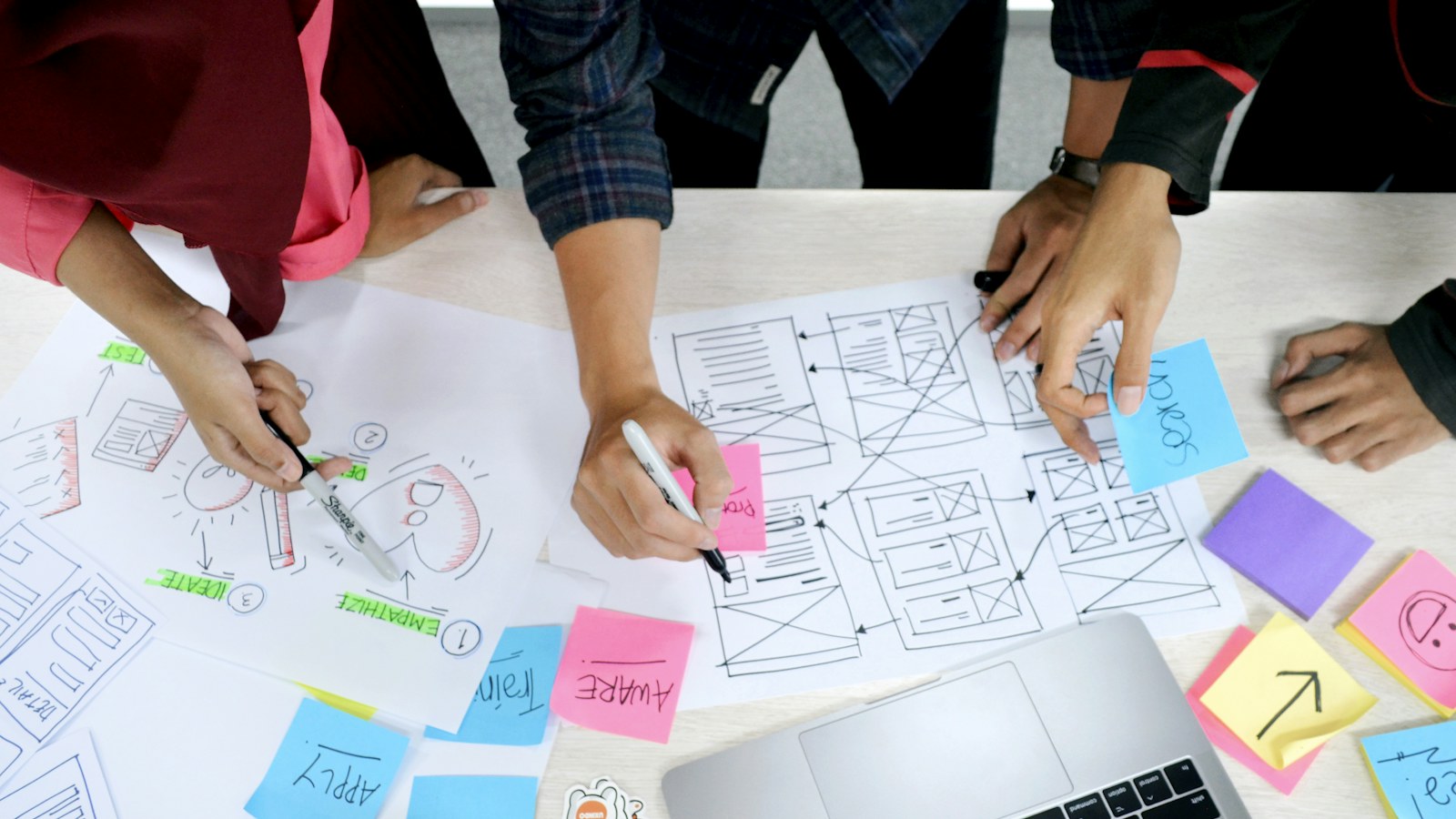
Based on the meeting and the content, the designer creates a design, usually of the homepage and one inner page first. Don’t judge the design only on whether it looks nice, but above all on this question: does a new visitor understand within five seconds what you do and what they should do? Bundle your feedback and give it in one go; that saves rounds.
Step 5: the build
Once the design is approved, the site is built, in our case in WordPress, so you can update copy and photos yourself later. At this stage the forms, any booking or webshop features and integrations are set up too. You’ll usually get a test environment where you can view the site before it goes live.
Step 6: testing
Before launch, everything is checked: does the site work on mobile, tablet and desktop? Do forms arrive properly? Is the site fast? Do all links work? Go through your most important pages yourself too, as a customer who doesn’t know your business yet.
Step 7: the launch
Going live involves more than pressing a button. Think of: an SSL certificate (the padlock), redirects from old pages to new ones so you keep your positions in Google, registering with Google Search Console, and analytics so you can see what the site delivers from day one.
Step 8: after the launch
A website is never finished. WordPress, the theme and plugins get updates all the time, and now and then you’ll want to change or add something. So agree up front how maintenance is arranged and what small changes cost. With us you choose a maintenance plan from € 29 per month, including hosting; with Verploy every update is tested on a copy first.
How long does it take?
That mainly depends on the size of the site and how quickly the content comes in. A clear business website is usually online within a few weeks; a webshop or multilingual site takes longer. Ask for a schedule with the key milestones up front, so you know where you stand.
Ready to get started?
Tell us briefly what you’re looking for. We’ll schedule a no-obligation introductory meeting and then give you a clear, tailored price. With us you have one fixed point of contact, from the first conversation until long after launch.
Book a free consultation Ask your question on WhatsApp
Prefer to call? +31 (0)166 700204, Mon–Fri 9:00–17:30 (CET).